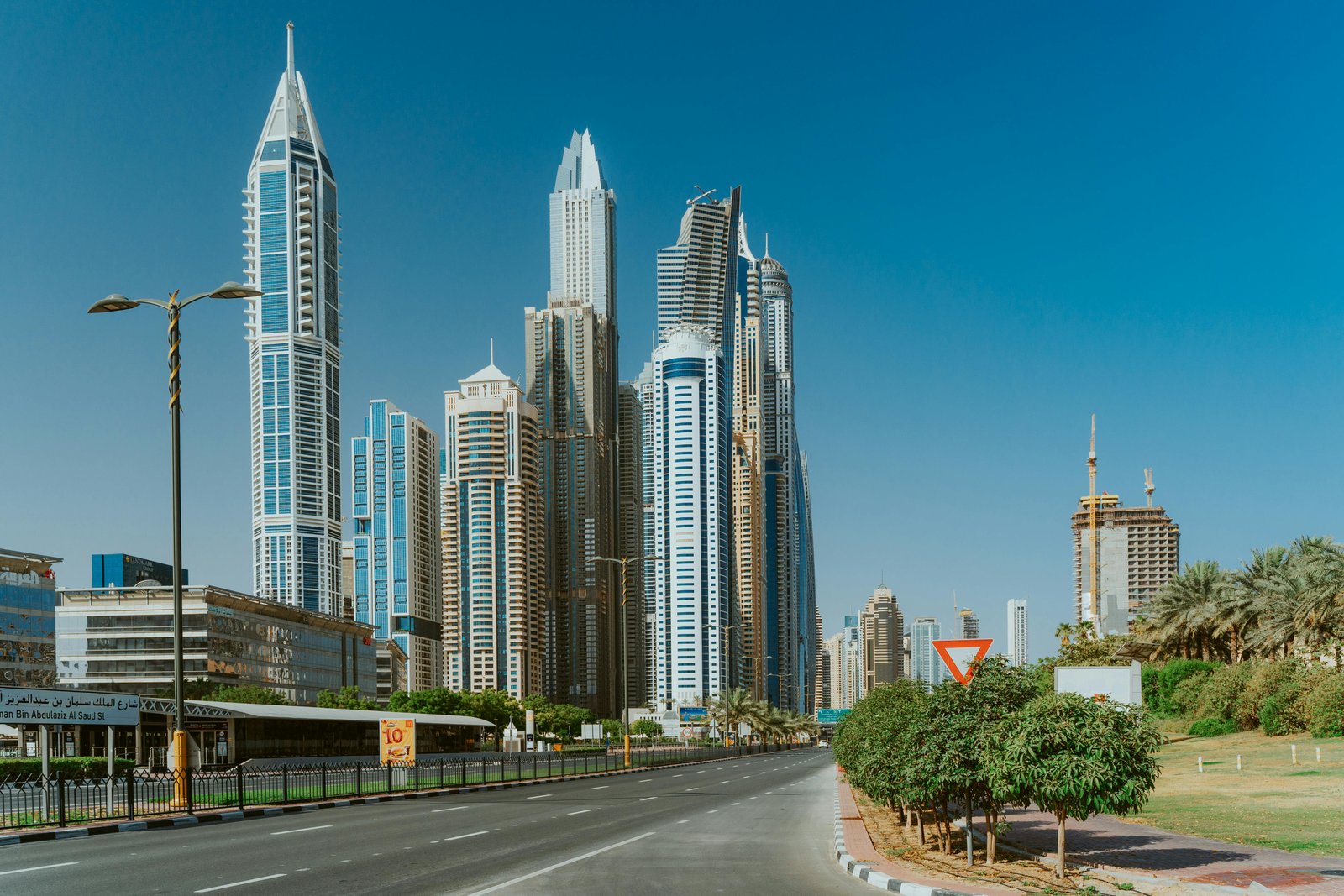
When Communication Matters Most — The Technology Behind Crisis Coordination in Dubai
April 2024. Rain is falling on Dubai at a rate the city has never recorded. Within hours, major roads are underwater. Vehicles are abandoned on the Sheikh Zayed Road. Dubai International Airport is managing disrupted operations across multiple terminals. And across the emirate, thousands of residents, businesses, and government agencies are trying to do the same thing at once — figure out what is happening, where the danger is, and what to do next.
In that moment, technology crisis coordination communication in Dubai was no longer a background system—it became the city's most critical infrastructure. From emergency responders to businesses and government agencies, effective communication technology enabled faster coordination, informed decision-making, and a more organized response during an unprecedented crisis.
Dubai's ambition is to be the world's smartest city. It has invested billions in digital infrastructure, AI systems, and connected government services. But the April 2024 event exposed something important: smart city technology is only as valuable as its ability to function — and coordinate — during the moments of highest stress.
This blog explores how technology crisis coordination communication in Dubai supports emergency response, business continuity, and public safety, while examining the communication systems organizations need to stay connected during major disruptions.
Why Crisis Communication in Dubai Is Different
Dubai's communication challenges during a regional disruption are distinct from those faced by most other cities. The population is extraordinarily diverse — over 200 nationalities, speaking dozens of languages, with varying levels of familiarity with local emergency systems and protocols. The city's physical layout — with dense urban clusters separated by desert and highway infrastructure — creates geographic communication challenges that are unique to Gulf cities.
The reliance on digital infrastructure is higher in Dubai than almost anywhere else. A disruption that knocks out mobile networks or internet connectivity doesn't just inconvenience people — it disables the primary channel through which most Dubai residents and businesses access government services, pay for things, communicate with employers, and receive emergency information.
And the speed of Dubai's business environment means that communication delays during a crisis have immediate financial consequences — for the city's economy as a whole and for individual businesses scrambling to manage client relationships, supply chains, and staff safety simultaneously.

The Technology Stack Powering Crisis Coordination in Dubai
1. Dubai's Integrated Command and Control Centers
Dubai has invested heavily in crisis management technology in Dubai, building unified command infrastructure that enables emergency services to coordinate faster using real-time traffic, weather, surveillance, and incident data.. The Dubai Police Operations Room, the Dubai Civil Defence Command Center, and the Dubai Corporation for Ambulance Services all operate sophisticated digital command platforms that integrate real-time data from across the city — traffic systems, CCTV networks, weather monitoring, and emergency call streams.
During the April 2024 rainfall, these systems allowed coordinated deployment of emergency vehicles, real-time monitoring of flood progression across road networks, and dynamic rerouting of resources to highest-priority areas. The existence of this infrastructure — built before the crisis — was directly responsible for the speed and coordination of the emergency response.
For businesses, understanding that this infrastructure exists — and knowing how to connect with it during an emergency — is a critical part of crisis preparedness.
2. UAE PASS and Digital Government Communication Channels
The UAE government's investment in digital identity and service delivery through UAE PASS has created a communication channel that reaches virtually every UAE resident with a smartphone. During emergencies, government agencies can push verified, official communications through digital channels that bypass the noise and misinformation of social media.
The National Emergency Crisis and Disasters Management Authority (NCEMA) uses integrated digital communication systems to coordinate across federal and emirate-level agencies — ensuring that crisis communication is consistent, accurate, and reaches the widest possible audience through the fastest available channels.

3. AI-Powered Monitoring and Predictive Systems
Dubai's Roads and Transport Authority (RTA) operates one of the most sophisticated AI-powered traffic and infrastructure monitoring systems in the world. During a regional disruption, this system provides real-time visibility into which roads are passable, where accidents have occurred, and how to route emergency vehicles most effectively.
The Dubai Electricity and Water Authority (DEWA) uses AI monitoring across its power and water infrastructure to detect failures early, prioritize repair crews, and communicate outage information to affected customers in near real time. Weather monitoring systems operated by the UAE National Centre of Meteorology provide advance warning data that feeds into emergency coordination platforms — giving crisis managers the lead time needed to pre-position resources and issue public advisories before conditions deteriorate.
For businesses, integrating with these official data feeds — through APIs or partnership with government entities — can provide critical early warning information that allows crisis response to begin before disruption reaches maximum severity.
4. Unified Business Communication Platforms
For organizations managing their own internal crisis communication, the technology landscape in Dubai is mature and well-supported. Cloud-based unified communication platforms — Microsoft Teams, Zoom, Slack, and regional alternatives — are widely deployed across Dubai's business community and provide the foundation for remote coordination during disruptions.
The key distinction between organizations that communicate effectively during crises and those that don't is almost never the technology itself. It is whether crisis communication protocols have been established, tested, and embedded into organizational culture before the disruption occurs. A company with a clear crisis communication tree, pre-established channels for different types of emergencies, and staff trained on remote coordination procedures will outperform a company with superior technology but no protocol — every single time.

5. Satellite and Backup Connectivity
Dubai's terrestrial connectivity infrastructure is world-class under normal conditions. But the April 2024 rainfall demonstrated that even world-class infrastructure has limits. For organizations where communication continuity is mission-critical — financial trading floors, hospital systems, logistics control centers, critical infrastructure operators — terrestrial connectivity alone is not sufficient.
Satellite communication systems, including low-earth orbit networks that now provide commercially viable broadband speeds, offer backup connectivity that is entirely independent of local infrastructure. VSAT terminals, satellite phones, and hybrid connectivity systems that automatically switch to satellite when terrestrial links degrade are increasingly part of the IT resilience toolkit for Dubai's most operationally critical businesses.
What the April 2024 Rainfall Revealed About Crisis Communication Gaps
The April 2024 event was instructive not just for what worked — but for what didn't. Several communication gaps became visible during the crisis that are worth examining for the lessons they offer.
Information fragmentation was a significant problem in the early hours. Different government agencies were communicating through different channels — social media accounts, WhatsApp groups, official apps, news releases — with varying levels of consistency and timeliness. Residents and businesses struggled to identify which source to trust and which instructions to follow.
Language accessibility was a visible gap in a city where the majority of the population does not speak Arabic as a first language. Emergency communications that reached Arabic speakers quickly took longer to reach the broader multilingual population.
Business-to-business crisis communication was largely improvised. Most companies had no established protocol for communicating with suppliers, clients, and partners during a disruption of this nature. The result was a flood of uncoordinated outreach — emails, WhatsApp messages, phone calls — that created noise rather than clarity.
These gaps are fixable. And fixing them is the responsibility of both government and the private sector.
What Dubai Organizations Should Build Right Now
For businesses serious about crisis communication readiness in Dubai, the investment required is not enormous — but it must happen before the next disruption, not during it.
Establish a crisis communication protocol that defines who communicates what, to whom, through which channels, and in what sequence. This should cover internal staff communication, client and supplier communication, and coordination with relevant government agencies. Test it at least annually through a simulated crisis exercise.
Invest in backup communication infrastructure appropriate to your operational risk profile. For most businesses, this means ensuring remote work capability for all staff, cloud-hosted communication systems with redundancy, and clear procedures for operating when primary communication channels are unavailable.
Register with official emergency communication channels. Ensure your organization is connected to NCEMA alerts, RTA traffic updates, and DEWA outage notifications through official digital channels — not just informal social media monitoring.
Build multilingual crisis communication capability. In a workforce as diverse as Dubai's, crisis communications that reach only English or Arabic speakers leave significant portions of your team without the information they need to stay safe and continue operating.
Conclusion: Dubai's Smart City Promise Depends on Crisis-Ready Communication
Dubai's vision for the future is a city where technology makes life smoother, safer, and more efficient for everyone who lives and works here. That vision is genuinely impressive — and genuinely within reach.
But a smart city that cannot communicate effectively during a crisis is not truly smart. It is sophisticated in calm conditions and fragile when conditions change.
The April 2024 rainfall was a stress test. Dubai passed in many respects — the emergency response was coordinated, the infrastructure recovered relatively quickly, and the city's fundamental resilience was demonstrated. But the gaps that appeared — in information consistency, language accessibility, and private sector preparedness — point toward work that remains to be done.
For businesses operating in Dubai, the message is clear. The communication technology exists. The government infrastructure is being built and improved. The question is whether your organization is ready to plug into it, use it effectively, and maintain its own internal communication capability when the next disruption arrives.
Because in Dubai, disruptions will come. The organizations that have invested in crisis communication technology and protocols will manage them as operational challenges. Those that haven't will experience them as crises.